_edited.jpg)
Loud Enough to Shake the Series
- Cody Tinsley
- May 20
- 4 min read

The arenas that turned playoff basketball into survival.
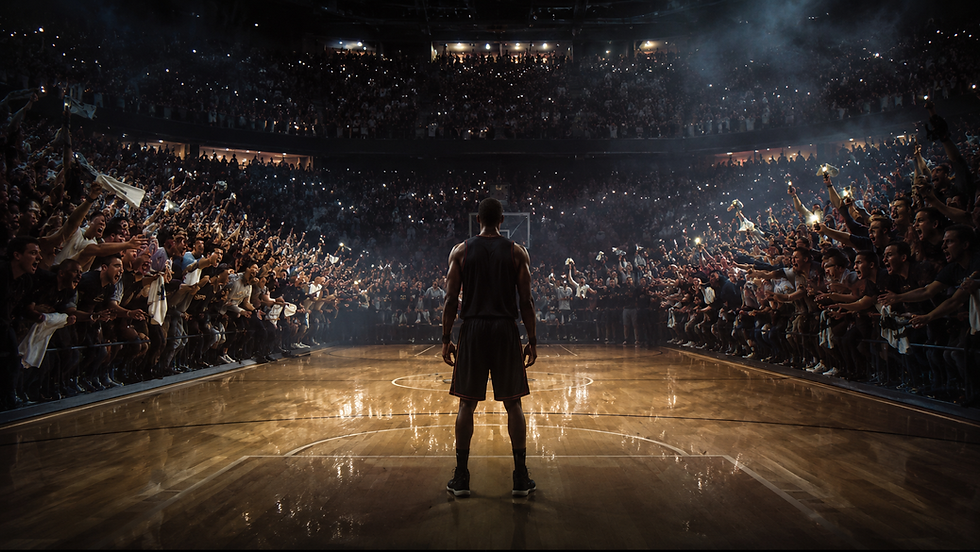
There are good crowds. There are playoff crowds. And then there are the buildings where the game feels physically different the second the home team makes a run.
The NBA has always loved the idea of home court advantage, but some arenas pushed beyond “advantage” and into genuine environmental hazard. Miss a rotation in those places and the roof felt like it was coming off. Refs got jumpy. Opponents stopped hearing play calls. Role players suddenly forgot how to shoot.
And historically? The numbers back a lot of it up. Home teams have won roughly 65% of playoff games across NBA history. But the truly feared buildings routinely pushed far beyond that, especially during specific eras when crowd, roster, and identity all lined up at once. Because the best home courts are never just loud. They become part of the team itself.
Take the old Boston Garden. Not TD Garden. The original building. Players talked about dead spots on the parquet floor like they were urban legends. The locker rooms were cramped. The heat was uneven. The crowd sat practically on top of the court. During the 1985-86 season, the Boston Celtics went 40-1 at home in the regular season, still one of the best home records ever. They were 10-1 there during the playoffs and won the title.
Boston’s crowd had a particular East Coast cruelty to it too. Players always describe certain crowds as “knowledgeable,” but Garden crowds weaponized that knowledge. They knew when to roar. They knew when to get on officials. They knew exactly which opposing role player to psychologically attack for forty-eight minutes.
Same thing with the Madison Square Garden during the 90s Knicks era. New York crowds are different because they treat basketball like theater criticism. If you’re soft, they know immediately. If you compete, they adopt you instantly. The Patrick Ewing Knicks teams fed off that tension. Opponents walked into the Garden knowing every missed free throw was going to feel public. And unlike some loud arenas, MSG’s reputation survives even when the Knicks are bad. That’s how you know a crowd is culturally important beyond winning percentage.
But sustained success absolutely helps create mythology. The United Center during the Jordan era became almost spiritually exhausting for opponents. From 1995-96 through 1997-98, the Chicago Bulls went 230-50 at home across regular season and playoffs combined. That kind of dominance changes crowd behavior. Fans stop hoping to win and start expecting it. The building tightens around opposing teams late in games because everybody inside assumes the home team is about to close the door.
The loudest modern equivalent was probably Oracle Arena during the Warriors dynasty.
“Roaracle” wasn’t just branding fluff. It genuinely sounded different on television. The acoustics trapped noise in a way that made every Steph Curry heat check feel apocalyptic. Golden State went 39-2 at home in 2015-16 and followed it with a 36-5 home record the next year.
But Oracle also reveals another truth about legendary arenas:scarcity matters.
Oakland embraced those Warriors because they felt deeply local. The fans had years of bad basketball before the dynasty arrived. When the breakthrough happened, the relationship between crowd and team became emotional in a way that can’t really be manufactured.
That’s part of why college atmospheres sometimes feel louder than pro ones too. Shared identity amplifies volume.
Which brings us to Sleep Train Arena. Or ARCO. Or Power Balance Pavilion. Or whatever name it had that particular season.
The early-2000s Kings crowds remain legendary because Sacramento only had the Kings. No NFL team. No MLB team. No split attention. That building became the entire city’s emotional outlet. The cowbells. The speed of those teams. The hatred toward the Lakers. Everything fed itself. Players still talk about how hard it was to communicate there in playoff games. The 2002 Western Conference Finals especially turned ARCO into something close to a religious event. Even now, twenty-plus years later, Kings fans still talk about that series like it happened last week.
Utah deserves mention here too, because the Delta Center had a built-in mechanic nobody else could replicate: altitude.The Stockton-era Jazz teams consistently turned home games into endurance tests. Utah posted a .759 home winning percentage in the 1990s, one of the best marks in the league during that stretch. And unlike flashy crowds, Utah’s atmosphere worked because it felt relentless. The altitude wore teams down physically while the crowd slowly sanded away at them mentally. By the fourth quarter, opponents looked tired before the basketball reasons even kicked in.
Seattle’s KeyArena had a similar reputation for pure noise. Gary Payton-era Sonics games felt chaotic in the best way. Indiana’s Market Square Arena crowds during the Reggie Miller years were viciously underrated too.
And honestly, some of the best home-court environments came from fanbases that felt perpetually overlooked. That chip-on-the-shoulder energy translates. You can still see it today in places like Ball Arena, where altitude combines with an already difficult modern offense. Denver went 33-8 at home during its 2022-23 championship regular season, then 10-1 there in the playoffs.
The best home courts usually sit at the intersection of:
great team
distinct local identity
sustained relevance
crowd belief
architectural weirdness
and at least a little bit of shared hostility
Fans don’t become legendary strictly through support. They become legendary because opposing teams genuinely dread walking into the building. Nobody remembers polite playoff atmospheres. They remember the places that felt loud enough to tilt a series.
The best NBA crowds aren’t just reacting to history. They’re actively trying to become part of it.


Comments